
Category
13 books available to read.

Charles Dickens
A Tale of Two Cities is a historical novel published in 1859 by Charles Dickens, set in London and Paris before and during the French Revolution. The novel tells the story of the French Doctor Manette, his 18-year-long imprisonment in the Bastille in Paris, and his release to live in London with his daughter Lucie whom he had never met. The story is set against the conditions that led up to the French Revolution and the Reign of Terror. In the Introduction to the Encyclopedia of Adventure Fiction, critic Don D'Ammassa argues that it is an adventure novel because the protagonists are in constant danger of being imprisoned or killed. As Dickens's best-known work of historical fiction, A Tale of Two Cities is said to be one of the best-selling novels of all time. In 2003, the novel was ranked 63rd on the BBC's The Big Read poll. The novel has been adapted for film, television, radio, and the stage, and has continued to influence popular culture.

Charles Dickens
A retelling of the story about a miser whose life is changed by Christmas.

Emily Brontë
Wuthering Heights is an 1847 novel by Emily Brontë, initially published under the pseudonym Ellis Bell. It concerns two families of the landed gentry living on the West Yorkshire moors, the Earnshaws and the Lintons, and their turbulent relationships with Earnshaw's adopted son, Heathcliff. The novel was influenced by Romanticism and Gothic fiction.

Louisa May Alcott
Louisa May Alcotts classic novel, set during the Civil War, has always captivated even the most reluctant readers. Little girls, especially, love following the adventures of the four March sisters--Meg, Beth, Amy, and most of all, the tomboy Jo--as they experience the joys and disappointments, tragedies and triumphs, of growing up. This simpler version captures all the charm and warmth of the original.

Edgar Rice Burroughs
Dr. Abner Perry has invented a high-calibration digging machine affectionately called 'The Iron Mole'. While testing his invention with his financial backer and former student David Innes, the machine malfunctions and the pair end up burrowing deep into the earth to emerge in Pellucidar, a lush underground cavern filled with giant prehistoric creatures. While fleeing one such creature, Dr. Perry and David are captured by strange inhuman soldiers, called Sagoths, and placed with other human slaves, where they meet Ghak and the beautiful Princess Dia. Dia is kidnapped by another human named Hoojah the Sly One, while Dr. Perry, David and the slaves are taken to the city of the Majars, large telepathic bird-like creatures that rule the underground world. While David is sent to repair the walls that protect the city from the molten lava, Dr. Perry is sent to transcribe books in the Majar's library. David is able to escape his captors and finds a secret passage out of the Majar city. Outside, David meets Ra, the chief of a human tribe. David suggests that Ra organize the tribes to defeat the Majar but Ra shows David the Majar's true power by taking him to the Majar's grotto where he witnesses one of the Majars hypnotize a female slave before swooping down and carrying her off in its powerful talons. While sneaking back into the city, David and Ra are captured and forced to battle a huge monster but they prevail, killing a Majar in the process. Seeing that the Majar are not invincible, the slaves revolt, allowing David and Ra to escape with Ghak and Dr. Perry. Along the way, Dr. Perry shows David the 'secret of the Majar', a nursery where all the Majar are born. David vows to destroy the Majars but first, he must rescue Dia from Jubal the Ugly One. With the aid of Ra and Ghak, David unites the human tribes and arms them with primitive weapons but the telepathic Majar are prepared for their attack. At first, the battle doesn't go well, with Dia and Dr. Perry being captured but Ra is able to destroy the nursery by unleashing the lava at the cost of his own life. Hypnotized by a Majar, Dia is about to be killed when David and the other humans arrive to save her and Dr. Perry. As the humans flee the city, it is consumed by lava, killing all the Majar. Returning to the surface, David asks Dia to come with him but she says she cannot and the two sadly part company.

Lewis Carroll
Alice's Adventures in Wonderland (commonly Alice in Wonderland) is an 1865 English children's novel by Lewis Carroll. A young girl named Alice falls through a rabbit hole into a fantasy world of anthropomorphic creatures. It is seen as an example of the literary nonsense genre. One of the best-known works of Victorian literature, its narrative, structure, characters and imagery have had huge influence on popular culture and literature, especially in the fantasy genre.
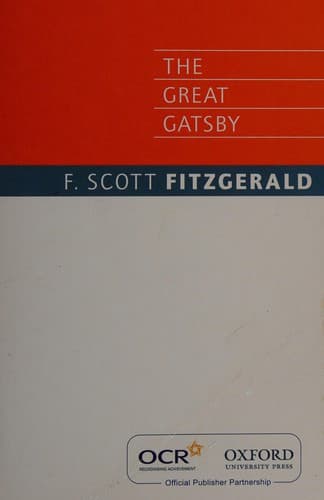
F. Scott Fitzgerald
Here is a novel, glamorous, ironical, compassionate – a marvelous fusion into unity of the curious incongruities of the life of the period – which reveals a hero like no other – one who could live at no other time and in no other place. But he will live as a character, we surmise, as long as the memory of any reader lasts. "There was something gorgeous about him, some heightened sensitivity to the promises of life.... It was an extraordinary gift for hope, a romantic readiness such as I have never found in any other person and which it is not likely I shall ever find again." It is the story of this Jay Gatsby who came so mysteriously to West Egg, of his sumptuous entertainments, and of his love for Daisy Buchanan – a story that ranges from pure lyrical beauty to sheer brutal realism, and is infused with a sense of the strangeness of human circumstance in a heedless universe. It is a magical, living book, blended of irony, romance, and mysticism. \--first edition jacket --- Also contained in: - [The Fitzgerald Reader](https://openlibrary.org/works/OL468551W/The_Fitzgerald_Reader) - [Three Novels of F. Scott Fitzgerald](https://openlibrary.org/works/OL468557W)

Herman Melville
"Command the murderous chalices! Drink ye harpooners! Drink and swear, ye men that man the deathful whaleboat's bow -- Death to Moby Dick!" So Captain Ahab binds his crew to fulfil his obsession -- the destruction of the great white whale. Under his lordly but maniacal command the Pequod's commercial mission is perverted to one of vengeance. To Ahab, the monster that destroyed his body is not a creature, but the symbol of "some unknown but still reasoning thing." Uncowed by natural disasters, ill omens, even death, Ahab urges his ship towards "the undeliverable, nameless perils of the whale."

Charlotte Brontë
The novel is set somewhere in the north of England. Jane's childhood at Gateshead Hall, where she is emotionally and physically abused by her aunt and cousins; her education at Lowood School, where she acquires friends and role models but also suffers privations and oppression; her time as the governess of Thornfield Hall, where she falls in love with her Byronic employer, Edward Rochester; her time with the Rivers family, during which her earnest but cold clergyman cousin, St John Rivers, proposes to her. Will she or will she not marry him?

Oscar Wilde
**The Picture of Dorian Gray** is a philosophical novel by Irish writer Oscar Wilde. A shorter novella-length version was published in the July 1890 issue of the American periodical *Lippincott’s Monthly Magazine*. The novel-length version was published in April 1891. (Source: [Wikipedia](https://en.wikipedia.org/wiki/The_Picture_of_Dorian_Gray))

Bram Stoker
Na história, um casal e seus amigos são atormentados por Conde Drácula, uma entidade sobrenatural e hematófoga que, presa em uma maldição contagiosa, pretende se mudar de seu recluso castelo na Transilvânia para a efervescente Londres do século XIX. Com a ajuda do professor Van Helsing, o grupo de amigos pretende enfrentar o morto-vivo, mesmo com todos os perigos que a ofensiva trará.

Mary Shelley
*Frankenstein; or, The Modern Prometheus* is an 1818 novel written by English author Mary Shelley. Frankenstein tells the story of Victor Frankenstein, a young scientist who creates a sapient creature in an unorthodox scientific experiment. Shelley started writing the story when she was 18, and the first edition was published anonymously in London on 1 January 1818, when she was 20. Her name first appeared in the second edition, which was published in Paris in 1821.

Jane Austen
Pride and Prejudice is an 1813 novel of manners written by Jane Austen. The novel follows the character development of Elizabeth Bennet, the dynamic protagonist of the book who learns about the repercussions of hasty judgments and comes to appreciate the difference between superficial goodness and actual goodness. Mr. Bennet, owner of the Longbourn estate in Hertfordshire, has five daughters, but his property is entailed and can only be passed to a male heir. His wife also lacks an inheritance, so his family faces becoming very poor upon his death. Thus, it is imperative that at least one of the girls marry well to support the others, which is a motivation that drives the plot.